
Whether you can recover compensation after a dog bite, and how long you have to act, depends on where the bite happened. Some states make owners strictly liable; others follow the one-bite rule or ordinary negligence. Each state also sets its own dog bite statute of limitations. This guide summarizes the dog bite laws by state for all 50 states and Washington, D.C.
The 4 Types of Dog Bite Laws
1. Strict liability statute
The owner is liable for a bite even if the dog never showed aggression before, unless a defense such as provocation or trespassing applies. Examples: California, Illinois, Florida.
2. Limited statute
The statute covers only some cases or damages: medical costs only in Pennsylvania, economic damages for serious injuries in Colorado, bites linked to the owner’s property in Alabama.
3. One-bite rule
The victim must show the owner knew, or should have known, that the dog was dangerous. Examples: Texas, Virginia, New York (outside medical costs for dangerous dogs).
4. Negligence
The owner is liable if they failed to use reasonable care, for example by breaking a leash law. In most states this theory is available alongside the others.
Dog Bite Laws and Deadlines by State
The table shows the main liability rule, the key law, and the general deadline to sue in each state. Click a state to see the dog bite lawyers listed there.
| State | Main liability rule | Key law | Deadline to sue |
|---|---|---|---|
| Alabama | Strict liability (on owner’s property) | Ala. Code § 3-6-1 | 2 years |
| Alaska | One-bite rule / negligence | None | 2 years |
| Arizona | Strict liability | A.R.S. § 11-1025 | 1 year (statute); 2 years (other claims) |
| Arkansas | One-bite rule / negligence | None | 3 years |
| California | Strict liability (bites) | Cal. Civ. Code § 3342 | 2 years |
| Colorado | Strict liability (economic damages, serious injuries) | C.R.S. § 13-21-124 | 2 years |
| Connecticut | Strict liability | Conn. Gen. Stat. § 22-357 | 3 years |
| Delaware | Strict liability | 16 Del. C. § 3053F | 2 years |
| District of Columbia | Negligence (dog at large) | D.C. Code § 8-1808 | 3 years |
| Florida | Strict liability (bites) | Fla. Stat. § 767.04 | Generally 2 years (4 years for bites before March 24, 2023) |
| Georgia | Owner’s knowledge required | O.C.G.A. § 51-2-7 | 2 years |
| Hawaii | Negligence (knowledge not required) | HRS § 663-9 | 2 years |
| Idaho | Strict liability | Idaho Code § 25-2810 | 2 years |
| Illinois | Strict liability | 510 ILCS 5/16 | 2 years |
| Indiana | One-bite rule / negligence (strict for workers on duty) | Ind. Code § 15-20-1-3 | 2 years |
| Iowa | Strict liability | Iowa Code § 351.28 | 2 years |
| Kansas | One-bite rule / negligence | None | 2 years |
| Kentucky | Strict liability | KRS § 258.235 | 1 year |
| Louisiana | Strict liability for preventable injuries | La. Civ. Code art. 2321 | 2 years (1 year for bites before July 1, 2024) |
| Maine | Strict liability (off owner’s property) | 7 M.R.S. § 3961 | 6 years |
| Maryland | Presumed knowledge; strict if running at large | Md. Cts. & Jud. Proc. § 3-1901 | 3 years |
| Massachusetts | Strict liability | M.G.L. c. 140, § 155 | 3 years |
| Michigan | Strict liability (bites) | MCL § 287.351 | 3 years |
| Minnesota | Strict liability | Minn. Stat. § 347.22 | 6 years |
| Mississippi | One-bite rule | None | 3 years |
| Missouri | Strict liability (bites) | RSMo § 273.036 | 5 years |
| Montana | Strict liability (in cities and towns) | MCA § 27-1-715 | 3 years |
| Nebraska | Strict liability (bites) | Neb. Rev. Stat. § 54-601 | 4 years |
| Nevada | Negligence | None | 2 years |
| New Hampshire | Strict liability | RSA 466:19 | 3 years |
| New Jersey | Strict liability (bites) | N.J.S.A. § 4:19-16 | 2 years |
| New Mexico | One-bite rule / negligence | None | 3 years |
| New York | One-bite rule (strict for medical costs, dangerous dogs) | Agric. & Mkts. Law § 123 | 3 years |
| North Carolina | One-bite rule (strict for dangerous dogs) | N.C. Gen. Stat. § 67-4.4 | 3 years |
| North Dakota | Negligence | None | 6 years |
| Ohio | Strict liability | Ohio Rev. Code § 955.28 | 6 years (statute); 2 years (other claims) |
| Oklahoma | Strict liability (not in rural areas) | 4 Okla. Stat. § 42.1 | 2 years |
| Oregon | Strict liability (economic damages) | ORS § 31.360 | 2 years |
| Pennsylvania | Strict liability (medical costs only) | 3 P.S. § 459-502 | 2 years |
| Rhode Island | Strict liability (outside owner’s enclosure) | R.I. Gen. Laws § 4-13-16 | 3 years |
| South Carolina | Strict liability | S.C. Code § 47-3-110 | 3 years |
| South Dakota | One-bite rule / negligence | None | 3 years |
| Tennessee | Strict liability, with residential exception | Tenn. Code § 44-8-413 | 1 year |
| Texas | One-bite rule / negligence | None | 2 years |
| Utah | Strict liability | Utah Code § 18-1-1 | 4 years |
| Vermont | One-bite rule | None | 3 years |
| Virginia | One-bite rule / negligence | None | 2 years |
| Washington | Strict liability (bites) | RCW § 16.08.040 | 3 years |
| West Virginia | Strict liability if running at large | W. Va. Code § 19-20-13 | 2 years |
| Wisconsin | Strict liability | Wis. Stat. § 174.02 | 3 years |
| Wyoming | One-bite rule / negligence | None | 4 years |
“None” means the state has no dog bite statute: claims rely on court-made rules (one-bite rule) or negligence. Deadlines are the general rules for adults; exceptions exist, for example for minors or claims against public entities.
Recent Changes to Dog Bite Deadlines
Florida (2023)
A 2023 tort reform (HB 837) cut the general deadline for negligence claims from 4 to 2 years for injuries on or after March 24, 2023. Older bites keep the previous deadline.
Louisiana (2024)
Act 423 of 2024 raised the deadline for tort claims, including dog bites, from 1 to 2 years for injuries on or after July 1, 2024.
Because laws change, always confirm the current deadline with a licensed attorney in your state, especially if your case is close to the limit. If you were bitten, read what to do after a dog bite; if your dog bit someone, read our guide for dog owners.
📊 How Much Is a Dog Bite Worth?
Our Dog Bite Settlement Calculator estimates your dog bite compensation from medical bills, lost wages, and shared fault.
FAQ: Dog Bite Laws by State
Which states have strict liability for dog bites?
Most states have a statute that makes the owner liable for at least some bites, even without prior aggression.
Examples include California, Florida, Illinois, Michigan, and Washington. Some statutes are limited: Pennsylvania covers only medical costs, Colorado only economic damages for serious injuries, and Alabama only bites linked to the owner’s property.
What is the one-bite rule?
The owner is liable if they knew, or should have known, that the dog was dangerous.
Despite the name, the dog does not need to have bitten someone before: growling, lunging, or other threatening behavior can be enough. States such as Texas, Virginia, and Arkansas follow this rule, often alongside negligence claims.
Which states have the shortest deadline for a dog bite lawsuit?
Kentucky and Tennessee, with 1 year.
In Arizona, claims under the dog bite statute also have a 1-year deadline, although other claims have 2 years. Louisiana moved from 1 to 2 years for bites on or after July 1, 2024.
Which states have the longest deadline?
Maine, Minnesota, and North Dakota, with 6 years.
Ohio also allows 6 years for claims under its dog bite statute, and Missouri allows 5 years.
Does strict liability mean the owner always pays?
No. Even in strict liability states, there are defenses.
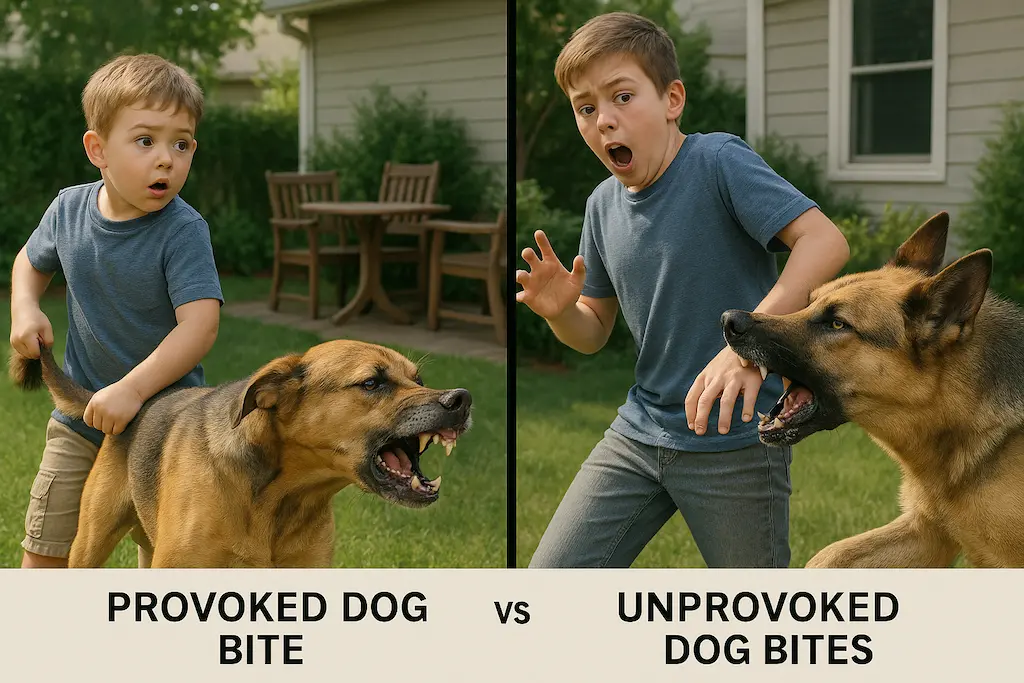
Common defenses are provocation, trespassing, and, in some states, the victim’s own share of fault. Learn more in our guide to provoked vs. unprovoked dog bites.
Are the deadlines different for children?
Often yes: in many states the deadline is paused until the child turns 18.
The rules vary by state, and parents may have separate deadlines for their own claims, such as medical bills. Check with a local attorney as early as possible.
Sources: Justia, Dog Bite Law: 50-State Survey (2023), and the state statutes cited in the table; Florida HB 837 (2023); Louisiana Act 423 of 2024 (La. Civ. Code art. 3493.1).